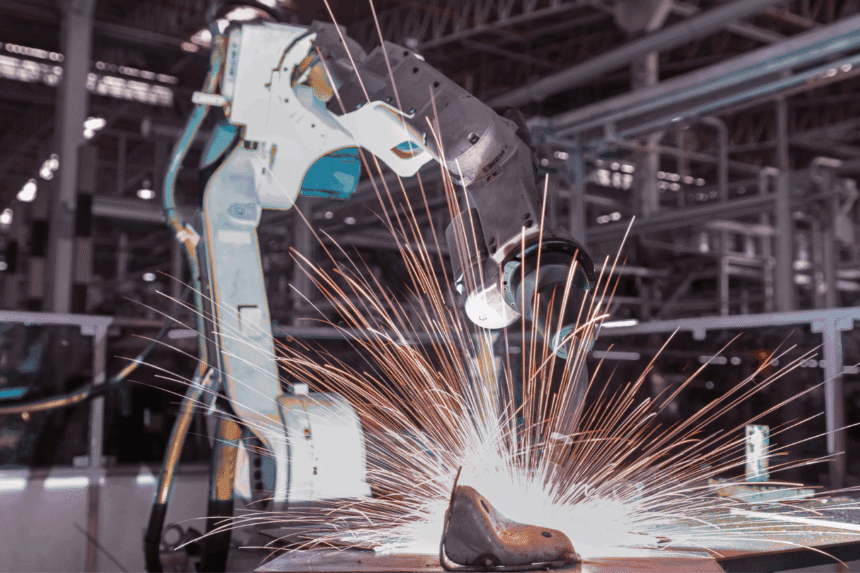

Labor shortages continue reshaping construction strategy in 2026. With skilled trade gaps persisting across multiple regions, contractors are increasingly turning to robotics and automation to sustain productivity and protect margins.
Automation is no longer experimental — it is operational support.
Construction robotics is evolving from pilot deployments to structured integration on active jobsites.
Why Robotics Adoption Is Accelerating
Several pressures are driving automation investment:
- Skilled labor shortages
- Rising wage costs
- Tight project schedules
- Safety improvement demands
- Increased infrastructure backlog
Robotics offers output scalability without proportional labor expansion.
Types of Construction Robotics in 2026
Automation now spans multiple applications:
Robotic Layout Systems
Improving precision in layout and reducing manual measurement errors.
Autonomous Equipment
Semi-autonomous earthmoving and grading systems enhancing consistency.
Bricklaying and Rebar-Tying Robots
Increasing repetitive task efficiency.
Concrete Finishing and Surface Automation
Enhancing uniformity and reducing manual strain.
Robotic Demolition Systems
Improving safety in hazardous environments.
Adoption varies by project type and scale.
Productivity Gains and Efficiency Metrics
Robotics can deliver:
- Increased daily output per crew
- Reduced rework rates
- Improved installation precision
- Lower material waste
- Faster schedule adherence
Automation enhances repeatable task performance.
However, integration requires careful workflow planning.
Safety and Risk Reduction
Automation contributes to safety by:
- Reducing exposure to high-risk tasks
- Limiting repetitive strain injuries
- Improving precision in hazardous environments
- Enhancing consistency in structural placement
Safety improvements can influence insurance exposure and workforce retention.
Cost Considerations and ROI
Investment decisions must account for:
- Upfront equipment cost
- Training requirements
- Maintenance and calibration
- Integration with existing workflows
Return on investment often depends on project volume and repeatability.
High-scale infrastructure and commercial projects show stronger ROI potential.
Workforce Impact and Adaptation
Contrary to early concerns, robotics adoption in 2026 is:
- Complementing skilled labor rather than replacing it
- Creating demand for technical operators
- Increasing need for digital literacy
- Supporting productivity in understaffed trades
Automation shifts workforce roles rather than eliminating them.
Barriers to Implementation
Challenges include:
- High capital expenditure
- Limited interoperability between systems
- Workforce training gaps
- Site variability constraints
- Technology reliability in harsh environments
Structured pilot programs improve adoption outcomes.
Strategic Implications for Contractors
Contractors integrating robotics strategically can:
- Improve bid competitiveness
- Enhance schedule reliability
- Reduce labor bottlenecks
- Strengthen safety performance metrics
- Differentiate in high-volume markets
Automation maturity is becoming a signal of operational innovation.
Conclusion
Construction robotics and automation in 2026 represent a pragmatic response to persistent labor shortages and productivity pressure.
While not a universal solution, structured integration of automated systems enhances repeatable efficiency, safety performance, and margin stability.
In today’s construction landscape, automation is not replacing craftsmanship — it is reinforcing it.
Are construction robots widely used in 2026?
Adoption is expanding, particularly in repetitive or precision-driven tasks.
Do robotics replace skilled workers?
No. They augment productivity and shift workforce responsibilities.
Is automation cost-effective for small contractors?
ROI depends on project volume and repeatability; larger firms often see faster returns.